

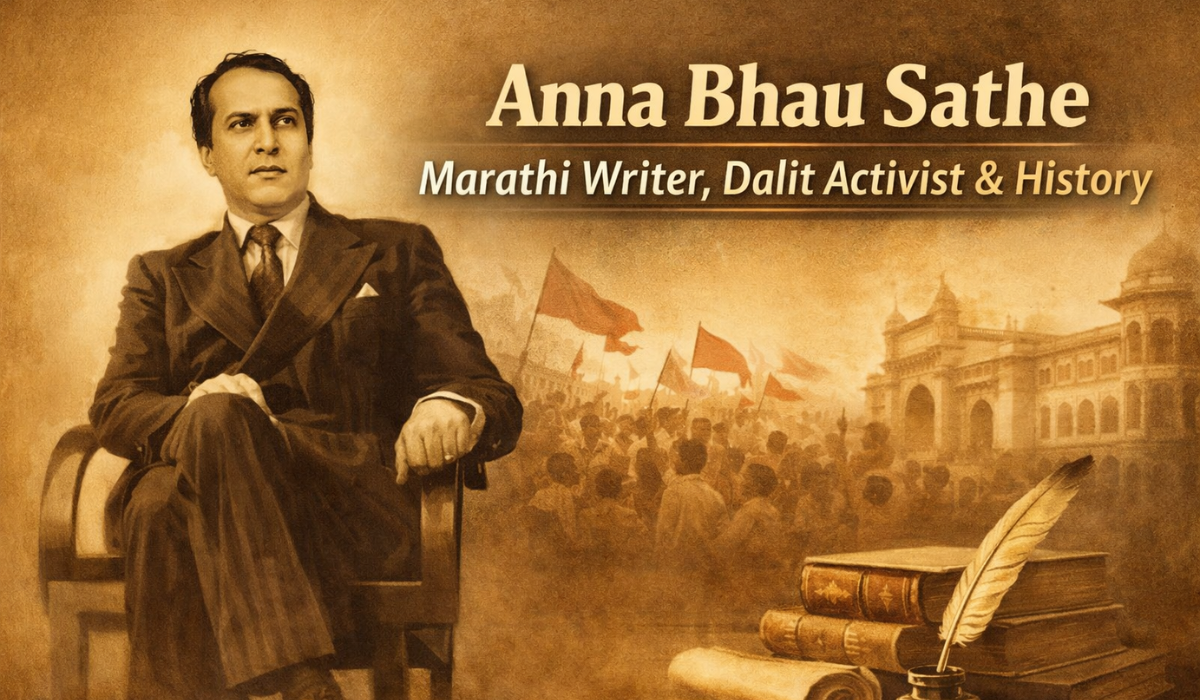
Anna Bhau Sathe, full name Tukaram Bhaurao Sathe, was one of the greatest Marathi writers, social reformers, and revolutionary poets in 20th-century India. Born in utter poverty, in the Matang community, one of Maharashtra’s most persecuted Dalit communities, he grew to become a towering literary figure whose work inspires millions even today. Anna Bhau’s information in Marathi & English. A man whose pen was mightier than any weapon of oppression. His life was an example of literature as a force for social justice.
Quick Information
| Full Name | Tukaram Bhaurao Sathe |
| Born | 1 August 1920, Wategaon, Sangli, Maharashtra |
| Community | Matang (Dalit) |
| Died | 18 July 1969, Mumbai |
| Pen Name | Anna Bhau Sathe |
| Genres | Novel, Tamasha, Poetry, Short Story, Powada |
| Ideology | Ambedkarism, Marxism, Anti-caste activism |
| Major Work | Fakira (Sahitya Akademi Award) |
Early Life and Background
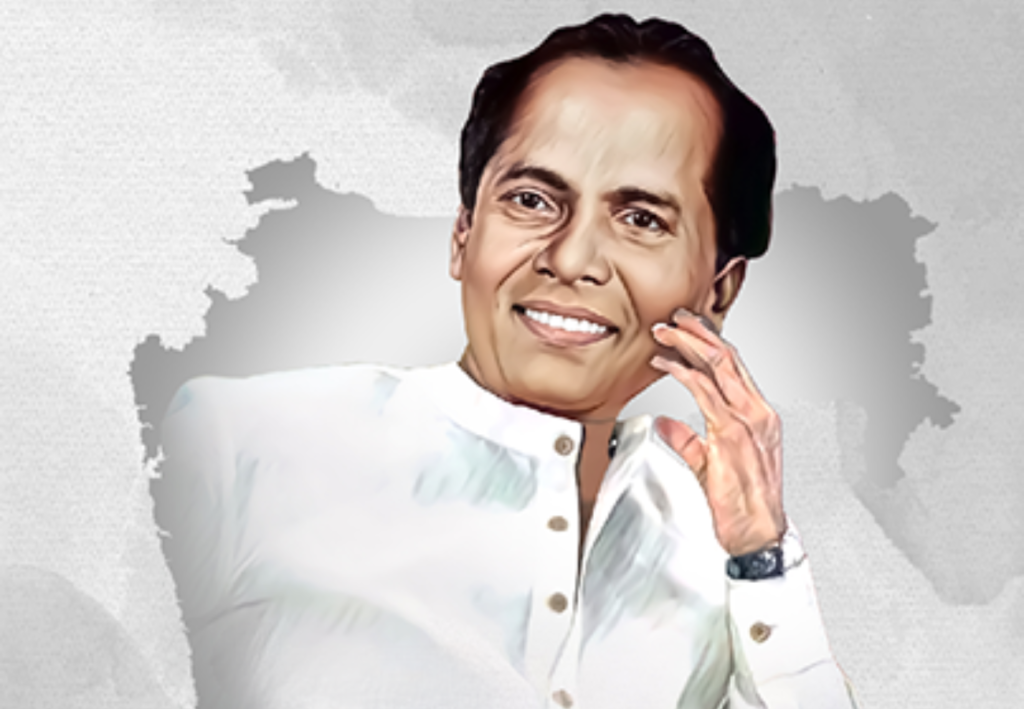
Anna Bhau Sathe was born on 1 August 1920 at a village called Wategaon in Sangli district of Maharashtra. His family were Matang caste, a community that suffered extreme discrimination in the hierarchy of castes. Deprived of formal education because of his caste, Anna Bhau was largely self-taught. Early on, he was deeply influenced by the anti-caste movement and revolutionary philosophy of Dr B. R. Ambedkar, shaping his worldview and with it, literature, for the rest of his life.
He had moved to Mumbai in pursuit of employment, working in the mills as well as putting on Tamasha, a traditional form of Marathi folk theatre on the streets. Here, in these humble beginnings, Annabhau Sathe honed his literary skills, which he used as a window for promoting folk art to combat social inequality and increase the political consciousness of the working class.
Read Also: OBCs Behind Congress Victory: Role of OBC Leaders, Strategy
At the Mountains of Madness by H. P. Lovecraft
Anna Bhau Sathe was an exceptionally prolific writer. His literary output is staggering, comprising more than 35 novels, 12 tamasha plays, 14 short story collections, along with numerous poems and a few powadas (ballads). The books of Anna Bhau become a mirror of lives ignored in the mainstream and who were invisible, marginalised by society, those living on the fringes, Dalits, landless farmers, mill workers, and prostitutes.
Fakira: It is one of the greatest among Anna Bhau Sathe’s books. Fakira Anna Bhau is a tale of a Matang warrior who battles oppression, injustice and colonial cruelty. This novel essentially captures the harsh realities of caste-based discrimination and has an important place in Dalit literature. Fakira won the Maharashtra State Government Award and was posthumously awarded the Sahitya Akademi Award, propelling Fakira Anna Bhau into canonical status in Indian literature.
Other notable works were Waranyacha Wagh, Chikhlatil Kamal and Majhi Maina, and a series of poignant powadas that would be sung at workers’ rallies and protest marches across Maharashtra.
Political Activism and Social Reform
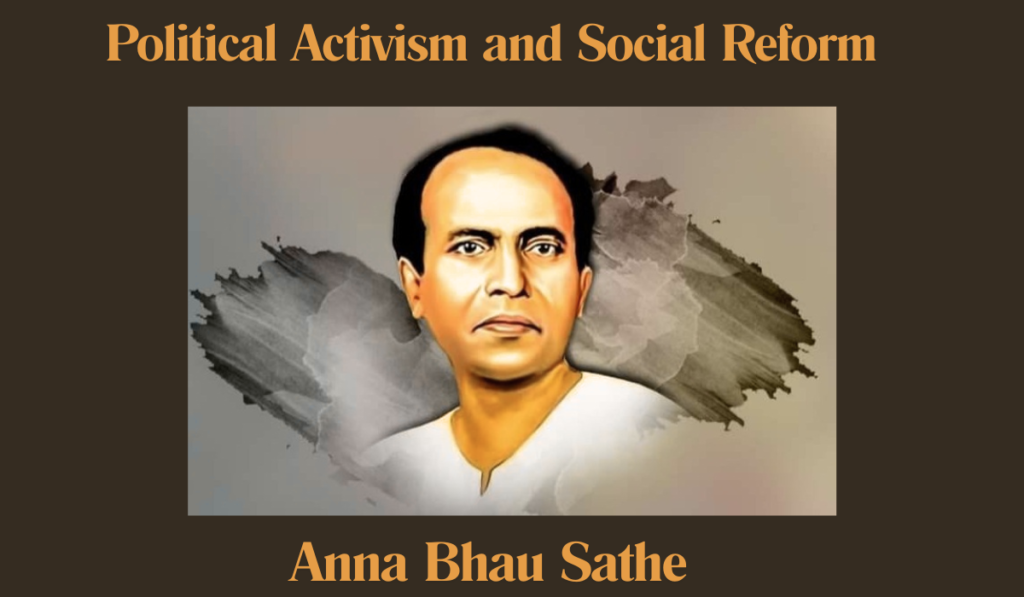
Anna Bhau Sathe was also politically active, well beyond his literary contributions. He was associated with the Communist Party of India (CPI) and the Lal Bavta Kalapathak (Red Flag Cultural Troupe), an organisation which, through art and theatre, organised workers and peasants. His powadas, a traditional form of Marathi narrative singing, were sung at rallies and marches, exhorting thousands. His powada on the Soviet Union, after a trip to Russia in 1961, also continues to be fondly remembered.
Annabhau Sathe’s ideology was an eclectic combination of Ambedkarism and Marxism. He regarded caste oppression and class oppression as different but inseparable sides of the same coin, arguing that Dalit liberation cannot be separated from the liberation of all exploited humanity.
The Anna Bhau banner became synonymous with protests at workers’ strikes, Dalit rallies and communist demonstrations across Maharashtra. His name, seen on banners, posters and pamphlets, bore the weight of an entire people’s desire for justice. Today, the Anna Bhau Sathe banner is ubiquitous in cultural events, literary festivals and political meets that pay respect to his legacy.
Read Also: Women’s Political Participation in India: Progress, Challenges
Anna Bhau Sathe Real Signature And Cultural Identity
To collectors and scholars of Marathi literature, the original signature by Anna Bhau Sathe carries with it a major historical value. His books, signed editions, letters or documents with the Anna Bhau autograph are precious artefacts. For a man who was denied formal education because of caste, signing his own name constituted an act of radical assertion; it asserted not only his identity as a sage but also his dignity and authorship.
His photos are also of tremendous cultural significance. The famous photo of Anna Bhau Sathe, usually depicting him in something resembling his signature pose, often while wearing a simple white kurta and a determined gaze, became synonymous with Dalit literary pride. The Anna Bhau Sathe image is replicated across Maharashtra, plastered on walls or carried in schools and community halls, especially within Dalit and working-class neighbourhoods.
Anna Bhau Sathe in Marathi and His Cultural Legacy
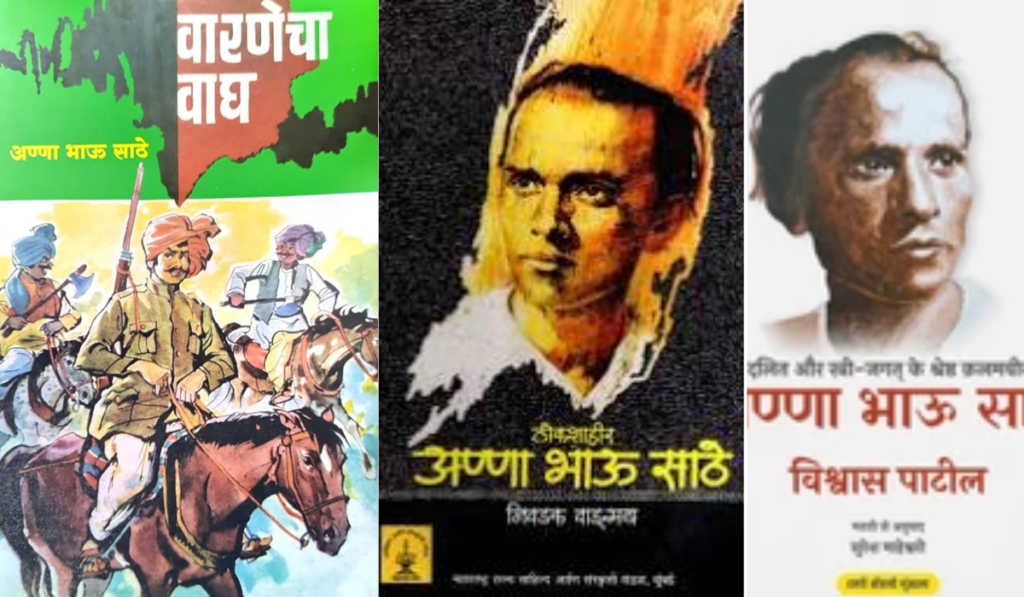
Readers looking for Anna Bhau Sathe information in Marathi find plenty available across government publications, research studies and community-published booklets. The Maharashtra government has formally acknowledged his activism: 1 August is celebrated as Anna Bhau Sathe Jayanti across the state with cultural events, readings of Anna Bhau books and literary discussions. His works form a part of the syllabus in schools and colleges across Maharashtra.
His writings are at once a testament to the suffering he endured and a tribute to the resilience of the human spirit. He wrote about people whose dignity was stolen by a deeply unjust system, but who resisted it with bravery, love and humour. The women in his novels stand out in particular; he depicted them as complicated, strong and fully human at a time when Dalit women faced double marginalisation by caste as well as gender.
A movie adaptation of the series, Fakira, was released in 2002 to introduce a new generation of audiences to Living Saint Anna Bhau’s story. There are statues of Anna Bhau Sathe in Mumbai, Sangli and some other cities. A road was named after him by the Brihanmumbai Municipal Corporation; various universities and public institutions were named in his honour.
Read Also: Raghav Chadha: Net Worth, Wife, Party, Suspension & More
When Did Anna Bhau Sathe Die?
Anna Bhau Sathe was born in 1920 and died on 18 July 1969 in Mumbai. He was 48 at the time of his death. Although he had so little time, the output that he left behind is vast. His death was steeped in poverty: He died broke, a bitter irony for a man who gave so much to society through his needlework. Anna Bhau died before he could see many of the social changes his writing helped to spark, but his legacy continued to gain strength after he was gone.
Thousands attended his funeral, including mill workers, Dalit activists, writers and common people, all bearing testimony to what an exceptional impact he had in their lives. Long past his expiry date, his impact persists via recurrent commemoration of the day he hatched (in recent years, these spring forth in droves with little coordination between them), sales of paper versions of power to the people and an explosion of identity groups named after him.
How Anna Bhau Sathe Inspires Today’s Generation
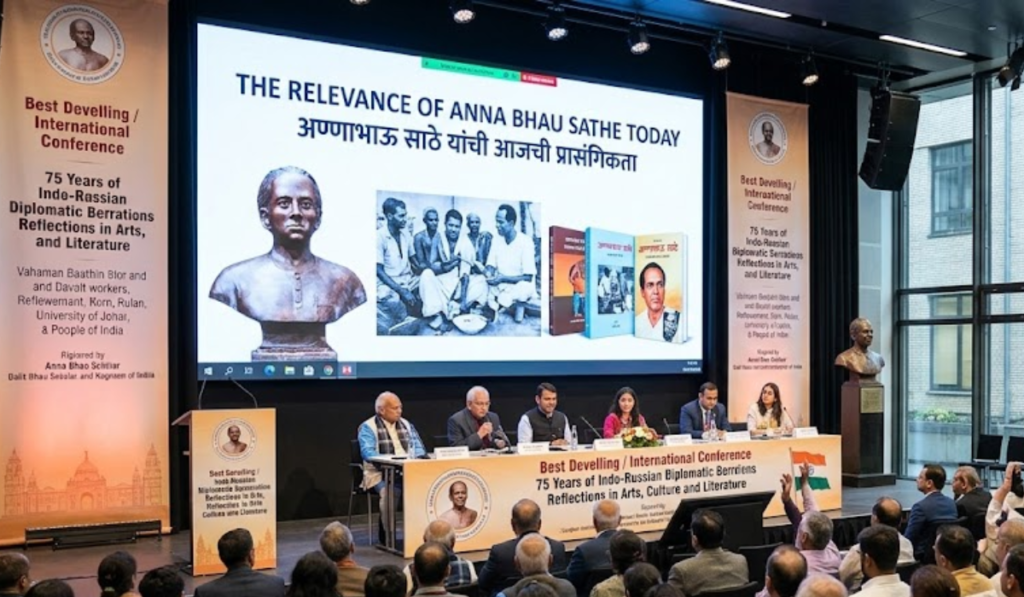
In present-day India, Anna Bhau Sathe’s relevance has not faded; if anything, it is only increasing. At a time of soaring caste violence, economic disparity and cultural marginalisation, his voice is both an echo and a guide. Young Dalit authors, activists and artists have taken inspiration straight from the font of his legacy. Anna Bhau Sathe’s books are still published as new editions, translated into other Indian languages and foreign ones, and read in university courses.
He was commemorated through a postage stamp by the Government of India, and state-level programmes celebrating Annabhau Sathe’s contribution to literature and social reform are regularly organised by the Maharashtra government. His photographs, the striking, unsparing image of Anna Bhau that has become iconic, hang in institutions and homes throughout India as a testament to the power of the word in the struggle for human dignity.
Anna Bhau Sathe was not just a writer, he was a movement, conscience and revolution through words. He started in the folk stages of Mumbai, and now he’s here on his way to recognition in academia, and a life-changing sentiment, which is something that should inspire anyone who believes in the power of art.
Read Also: Manoj Tiwari: The Cricketer, Singer, Actor, and Politician
Frequently Asked Questions (FAQs)
Q: Who was Anna Bhau Sathe?
A: Anna Bhau Sathe (1920-1969) was a prominent Marathi writer, social reformer and Dalit activist from the state of Maharashtra. Born into the Matang community, he was largely self-taught and used literature, folk theatre and ballads to struggle against both caste discrimination and economic exploitation.
Q: What are the contributions of Anna Bhau Sathe?
A: Some of the best-known Anna Bhau Sathe books are Fakira (his magnum opus, or master novel), Waranyacha Wagh, Chikhlatil Kamal and several anthologies of short stories as well as tamasha plays. Fakira became the most read among all Anna Bhau Sathe’s books and was also awarded the Sahitya Akademi Award posthumously.
Q: When did Anna Bhau Sathe die?
A: 18 July 1969 in Mumbai. He was 48 years old. He died in penury, yet his literary legacy expanded immeasurably posthumously. 1 August, his birth anniversary, is celebrated as Anna Bhau Sathe Jayanti across Maharashtra.
Q: Fakira by Anna Bhau Sathe is significant for multiple reasons.
A: Fakira Anna Bhau Sathe is an emblematic figure of Dalit literature. The novel is about the Matang hero who revolts against colonial and caste oppression. Won the Maharashtra State Government Award and, posthumously, the Sahitya Akademi Award, making it one of the greatest Marathi novels ever.
Q: Where to find information about Anna Bhau Sathe in Marathi?
A: There is a lot of information on Anna Bhau Sathe in Marathi sources like Maharashtra state government pamphlets, university syllabi, community booklets and public libraries. His life and work also get attention in Marathi newspapers, cultural magazines and online platforms dedicated to Dalit literature, as well as Maharashtra’s literary heritage.
Q: Symbols of the original signature of Anna Bhau Sathe
A: Since Anna Bhau Sathe was not educated formally because of caste-violence at school, the original signature is both historically relevant and evidence of his identity and authorship. Books autographed by the deceased and letters that have his original signature are coveted literary artefacts among collectors and scholars.
Q: What is Anna Bhau Sathe’s ideology?
A: Annabhau Sathe was a fusion of Ambedkarism and Marxism. He felt caste oppression and class exploitation were interdependent issues; to liberate the Dalits, he believed one needed to tackle them both. He was also an active member of the Communist Party of India and wrote folk theatre, powadas and novels to propagate the message of social justice.
Q: Why are there so many photographs of Anna Bhau Sathe on display?
Q: One of the more popular photos associated with Anna Bhau Sathe is also an icon of literary pride and resistance among Dalits. His portrait (conveying dignity, and often depicted in a plain white kurta like the one he used to wear) can be found in community halls, schools, public spaces and homes throughout Maharashtra: a symbol of his lasting legacy as the scourge of the oppressed.